Jayne Posner: The Woman Who Kept the Lights On
Quick Facts
| Detail | Information |
| Full Name | Jaye Posner (also widely spelled “Jayne Posner” online; “Jaye” is supported by stronger primary sources) |
| Born | c. 1940, Brooklyn, New York, USA |
| Nationality | American |
| Education | Abraham Lincoln High School, Brooklyn; university degree (institution unverified) |
| Profession | Schoolteacher, New York City public school system |
| Marriage | Neil Diamond (married 1963; separated 1967; divorced November 25, 1969) |
| Children | Marjorie Diamond (b. 1965); Elyn Diamond (b. 1968, later Elyn Diamond Resnick) |
| Known For | First wife of singer-songwriter Neil Diamond; educator |
| Public Profile | Deliberately private; no social media presence; no public interviews on record |
| Estimated Net Worth | Approx. $500,000 (sources estimate, primarily from teaching career and divorce settlement) |
The Brooklyn Where She Was Made
In the 1940s and 1950s, Brooklyn was more than just a location.It was a particular kind of formation. Neighborhoods ran on tight sidewalks and tighter loyalties, immigrant families trading the old world’s instability for the American promise of education and steady work. Jaye Posner grew up inside that compact world, and it left its mark on everything that followed.
She attended Abraham Lincoln High School, an institution that has quietly produced a remarkable number of notable Americans across generations. The school’s culture rewarded disciplined application over flash, which suited her temperament precisely. It was in that environment that she first encountered a young man named Neil Diamond — reportedly, by some accounts, while Diamond was working a summer waiter job at a resort in the Catskills, but according to some accounts, their first meeting took place right in the school’s hallways. The precise circumstances remain blurry, as they often do when private lives are reconstructed from the outside decades later.
What is not disputed is that the relationship deepened through their late teen years. They dated for approximately five years before marrying in 1963.
See also “Alex Cowper-Smith: The Banker Who Chose Discretion Over Celebrity“
The Educator, Not the Accessory
Before Diamond sold a single record, Posner was already building a professional identity of her own. She trained as a schoolteacher and worked in New York City’s public school system — a job that, in mid-century urban America, demanded endurance and genuine commitment in equal measure.
Teaching in a large, underfunded urban district was not a romantic vocation. It meant navigating overcrowded classrooms, administrative bureaucracy, and the daily unpredictability of children who arrived from difficult circumstances. Posner did this work with consistency over years, both before her marriage and during it. That professional steadiness has been consistently underplayed in coverage that reduces her to a biographical footnote.
The economic dimension matters too. In the early 1960s, Diamond was grinding through the songwriter’s hustle — placing songs with other artists, knocking on doors at New York’s Brill Building, earning just enough to stay in the game. Her teacher’s salary provided the household’s financial floor. She was, in a very practical sense, the reason the dream had time to become real.
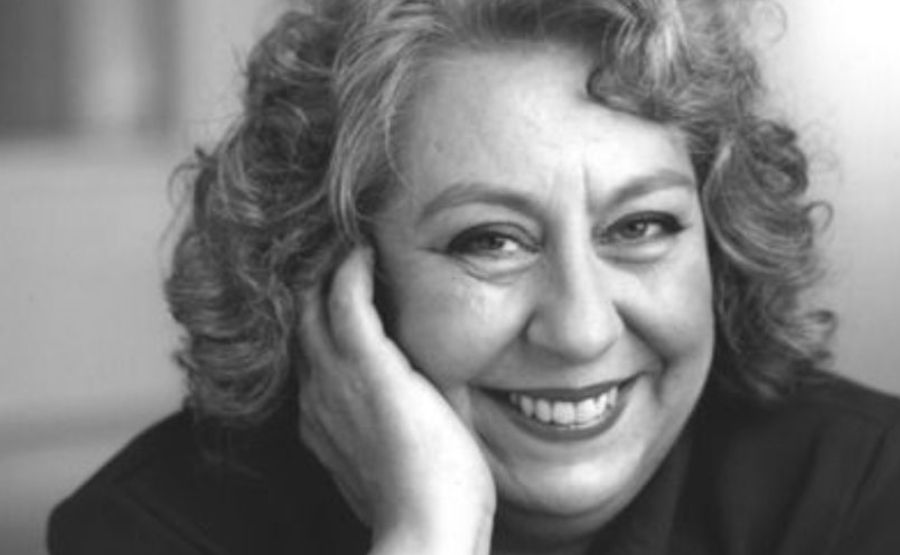
A Marriage at the Edge of Fame
They married in 1963, and the early years were ordinary in the best sense. Diamond was unknown, writing songs that other artists would record — “Red, Red Wine,” “I’m a Believer” for The Monkees — while Posner taught and they built a shared domestic life in Brooklyn. The contrast between their professional worlds could not have been sharper: her days were structured and rooted, his were restless and speculative.
By 1965, their daughter Marjorie arrived. By 1968, their second daughter Elyn. The family grew even as Diamond’s career began doing the same. His transition from songwriter-for-hire to performing artist accelerated through the mid-1960s, which meant longer absences, greater uncertainty, and the particular gravitational pull of an industry that rarely accommodates the rhythms of family life.
Diamond himself, in later years, was candid about the failure. In a 2011 interview with The Independent, he acknowledged that the demands of his career kept him away for long stretches and that this distance carried lasting consequences. He described those departures with the tone of a man who had not entirely made peace with what they cost. One account quotes him calling Posner “a spectacular woman” and accepting that the breakdown was substantially his fault.
The couple separated in 1967, two years before the divorce was finalized. Their marriage ended the same year Diamond released “Sweet Caroline” — perhaps the most bittersweet of coincidences. His most enduring anthem of warmth and togetherness arrived as his first family was formally dissolving.
Personal Life
The emotional reality of the marriage and its end belongs almost entirely to what Posner has chosen not to say. She gave no interviews after the separation. She published no memoir.She did not interact with the media or place herself in Diamond’s growing public narrative.That silence was not passive — it appears to have been a considered, sustained, and resolute choice.
What the Broadway musical A Beautiful Noise (which opened in Boston in 2022, then ran on Broadway through 2024 before a national tour) added to the public understanding of the marriage was uncomfortable: the officially sanctioned stage biography depicts Diamond as having been unfaithful to Posner with his future second wife, Marcia Murphey. The character of Jaye Posner appears as someone actively betrayed, not merely left behind by circumstance. When the musical launched and received wide coverage, Posner still said nothing. Her silence held even when the stage production gave audiences a dramatized version of her pain.
Her daughters seem to have been her main focus following the divorce.Marjorie and Elyn were raised with their mother’s characteristic emphasis on privacy and stability. Neither daughter has entered public life in any prominent way, which speaks to the values their mother transmitted. Elyn, now Elyn Diamond Resnick, has had a career in creative advertising and has maintained some connection to charitable work. Both women remain, like their mother, deliberately removed from the celebrity orbit their father’s career created.
Whether Posner remarried is genuinely unknown. No reliable source has documented a second marriage, and she has offered no public clarification. The absence of documentation is itself a kind of answer about how thoroughly she separated her private life from any public record.
The Inheritance She Didn’t Know She Was Leaving
There is one moment, small and accidental, through which Jaye Posner’s life touches music history without her ever having intended it.
Her eldest daughter Marjorie, still a young child, was with her father at some point during a New York visit when she looked out a hotel window at the city below and said, simply: “What a beautiful noise.” Diamond heard the phrase, recognized something in it, and eventually built one of his most celebrated albums around those three words. He even had his girls sing on an early tape that he made.
The story is characteristic of how Posner’s influence on Diamond’s work operates — always at one remove, always through someone else, always without her fingerprints on the final artifact. She did not contribute lyrics or melodies. She contributed the conditions under which a certain kind of life could be sustained long enough for the music to emerge. That is a different order of contribution, harder to credit, easier to overlook.

Lasting Legacy and Influence
Jaye Posner’s legacy does not fit the usual biographical categories. She holds no public awards. She produced no body of work that can be catalogued. She gave no speeches and left no documented archive.
What she left is more diffuse and arguably more durable. Her decades as a New York City educator shaped a generation of students whose names will never appear in any account of her life. Her decision to raise her daughters outside the pressures of celebrity proximity appears to have worked: Marjorie and Elyn grew into adults who have lived on their own terms. And her absolute refusal to capitalize on her connection to one of the most commercially successful musicians in American history stands, in retrospect, as a kind of integrity that the culture rarely rewards because it rarely sees.
The Broadway musical’s national tour, which launched in 2024 and continued into 2026, has kept her name in periodic circulation. The character of Jaye Posner, played in the original Broadway production by Jessie Fisher and in the tour by Tiffany Tatreau, gives audiences a sympathetic portrait of a woman being left behind by someone she helped build. Reviews noted the warmth and specificity Tatreau brought to the role — a character defined by what she chose to endure quietly. Tatreau herself described the character as someone present at “the origin point” of Diamond’s transformation from hidden songwriter to performing star, a witness to a transition that would eventually cost her the marriage.
That theatrical representation is the closest thing to a public monument Posner has. She did not sanction it. She did not attend it. She has not, as far as any public record shows, commented on it at all.
Final Words
Any honest account of Jaye Posner must begin and end with the limits of what can be known. The verified facts are few: born c. 1940 in Brooklyn; attended Abraham Lincoln High School; worked as a schoolteacher; married Neil Diamond in 1963; had two daughters; divorced in 1969; has maintained strict privacy ever since. Everything else — her inner life, her experience of the marriage’s breakdown, her view of Diamond’s retrospective regret, her feelings about seeing herself portrayed on stages across America — belongs to her alone.
What those facts suggest is a life built on a kind of moral consistency that requires no audience. She did not perform her values; she enacted them. She kept working through difficult years. She raised her children without using their father’s fame as either a resource or a grievance. She declined, decade after decade, the invitation to make herself legible to a public that would have consumed her story and moved on.
There is something worth sitting with in that. In a culture that equates silence with weakness and self-concealment with shame, Posner’s withdrawal from public life reads differently with time. It begins to look less like retreat and more like refusal — a deliberate choice to locate her life’s meaning somewhere other than in the mirror that celebrity culture holds up.
Neil Diamond built a catalog of songs about longing, connection, and the specific loneliness of a life lived partly in public and partly in the dark. Whatever he was reaching for in those songs, Jaye Posner seems to have already found it — or decided she didn’t need it — long before the last record was made.
FAQs
1. What is Jaye Posner’s correct name spelling?
“Jaye” is the spelling supported by stronger sources, including the official materials for the Broadway musical A Beautiful Noise and credible Neil Diamond biographical references. “Jayne” proliferates across online biography sites but appears to originate from early transcription errors that spread through copy-paste publishing.
2. When and where was Jaye Posner born?
She was born around 1940, most likely in Brooklyn, New York. Exact birth records have not been made public, consistent with her lifelong preference for privacy.
3. How did Jaye Posner meet Neil Diamond?
The two most commonly cited accounts differ slightly. Wikipedia’s entry on Diamond states they first met when he was working as a summer waiter at a Catskills resort. Many other sources describe them as high school sweethearts who met at Abraham Lincoln High School in Brooklyn. The timeline suggests both could be partially true — an initial meeting followed by a deepening relationship through their school years.
4. When did Jaye Posner and Neil Diamond marry?
They married in 1963, before Diamond achieved national fame. At the time, he was still mostly employed as a songwriter for hire.
5. Why did their marriage end?
The couple separated in 1967 and divorced on November 25, 1969. Diamond has publicly attributed the breakdown largely to his own career obsession and frequent absences. The Broadway musical A Beautiful Noise depicts the marriage ending in part due to Diamond’s infidelity with his future second wife, Marcia Murphey.
6. How many children do Jaye Posner and Neil Diamond have?
Two daughters: Marjorie Diamond, born 1965, and Elyn Diamond (later Elyn Diamond Resnick), born 1968. Both have maintained private lives as adults.
7. What was Jaye Posner’s career?
She worked as a schoolteacher in New York City. Teaching appears to have been her primary profession both during her marriage and after her divorce. No subsequent career has been publicly documented.
8. Did Jaye Posner’s daughter inspire a Neil Diamond song?
Yes, indirectly. Marjorie Diamond is credited with uttering the phrase “What a beautiful noise” as a child, observing the sounds of New York from a hotel window. Diamond turned that phrase into one of his most celebrated album titles and tracks. He reportedly recorded an early demo that included his daughters’ voices.
9. Did Jaye Posner ever remarry?
No confirmed accounts exist of a second marriage. Reliable sources simply note the absence of documentation, which is consistent with her broader practice of withholding personal information from public view.
10. Has Jaye Posner ever spoken publicly about her marriage to Neil Diamond?
No. There are no documented interviews, public statements, or published commentary from Posner about her marriage, its breakdown, or Diamond’s subsequent career. Her silence on the subject has been total and sustained over decades.
11. How is Jaye Posner depicted in the Broadway musical A Beautiful Noise?
She appears as a sympathetic character — a supportive high school sweetheart who stands by Diamond during his uncertain early career and is ultimately betrayed when he begins an affair with Marcia Murphey. Jessie Fisher played the role in the original Broadway production; Tiffany Tatreau portrayed her in the national touring production.
12. Did Jaye Posner respond publicly to her portrayal in the musical?
Not on any public record. The musical ran on Broadway through 2024 and has continued on national tour into 2026, generating consistent coverage. Posner has not commented.
13. What is Jaye Posner’s estimated net worth?
Estimates from multiple sources place her net worth at approximately $500,000, derived primarily from her teaching career and her divorce settlement with Diamond. By comparison, Neil Diamond’s net worth is estimated at approximately $200 million.
14. Is Jaye Posner still alive?
Based on her birth year of approximately 1940, she would be in her mid-eighties as of 2026. No public information confirms or contradicts this. She has not made any documented public appearance in recent decades.
15. What is Jaye Posner’s broader historical significance?
She represents the generation of women who sustained early-career artists through economic and emotional support while maintaining independent professional identities of their own. Her subsequent privacy, in a media environment that rewards oversharing, makes her a quietly unusual figure — one whose significance is defined less by what she did in public than by what she consistently refused to do.
Explore The Inspiring Journeys Of Influential People On Daily Context.