Alex Cowper-Smith: The Banker Who Chose Discretion Over Celebrity
Alex Cowper-Smith remains relevant today as a rare modern exemplar of professional achievement and deliberate privacy—a man who briefly entered celebrity orbit yet consciously retreated, offering quiet counterargument to the exposure inherent in contemporary life.
Quick Facts
| Attribute | Details |
| Full Name | Alex Cowper-Smith |
| Birth Date | October 1981 |
| Birthplace | Hertfordshire, England |
| Nationality | British |
| Education | University of Nottingham; Westminster School, London (Business & Finance, 2003) |
| Primary Career | Investment Banking, Financial Services |
| Major Employer | Goldman Sachs (Associate/Financier) |
| Marital Status | Divorced |
| Spouse | Alice Eve (m. 2014–2017) |
| Children | None |
| Estimated Net Worth | $500,000–$1,000,000 USD |
| Current Location | London, United Kingdom |
| Known For | Former Goldman Sachs banker; ex-husband of actress Alice Eve |
Early Life and Education: The Foundation of Discretion
Alex Cowper-Smith was born in October 1981 in Hertfordshire, England, into a cultural British household that appears to have prioritized education and propriety over public visibility. Details about his family remain deliberately obscure—his parents’ names, his siblings (if any exist), and his family’s professional background have never been disclosed to media. This early retreat from biographical exposure would become his defining characteristic throughout his adult life.
His education followed the trajectory of accomplished British professionals of his generation. He attended Westminster School, one of London’s most prestigious independent institutions, where he developed the academic discipline and analytical thinking that would later characterize his banking career. Importantly, it was at Westminster School that he first met Alice Eve during their teenage years—a connection that would resurface two decades later to briefly reshape both their lives.
After completing his secondary education, Cowper-Smith enrolled at the University of Nottingham, where he pursued a degree in business and finance, graduating in 2003. This academic foundation was neither exceptional nor undistinguished; rather, it represented the conventional pathway for bright British students seeking entry into the competitive financial sector. He emerged from university with technical competency in economics, portfolio analysis, and corporate finance—practical skills that would prove immediately marketable in London’s financial district.
See also “Jan Ashley: Beauty, Quiet, and the Weight of a Famous Name“
Career in Finance: Ambition Without the Spotlight
Cowper-Smith’s professional life embodied a particular British financial archetype: the competent, driven associate who excels within institutional hierarchies while remaining essentially unknown beyond his professional circle. After graduation in 2003, he was hired by Goldman Sachs, a major London-based global investment bank with headquarters in Manhattan.Goldman Sachs, even among top-tier financial institutions, is known for recruiting talent aggressively and maintaining extraordinarily demanding work cultures.
At Goldman Sachs, Cowper-Smith began as an associate, a role that typically involves analyzing potential transactions, managing client relationships at junior levels, and supporting senior bankers in executing complex deals. The work is intellectually rigorous but grueling—fourteen-hour days, weekend work, and the perpetual pressure of competitive advancement are standard. By 2015, roughly a decade into his tenure, he had been promoted to a more senior financial position, managing significant accounts and client portfolios. This trajectory suggests solid performance and the trust of senior management, though he never ascended to the most visible executive levels where names become industry fixtures.
What is notable about Cowper-Smith’s banking career is not what he achieved, but what he did not achieve—or rather, what he did not pursue. He never became a public figure in finance, never graced business magazine covers, never built a personal brand. In an industry where successful bankers often cultivate media relationships and speak at industry conferences, Cowper-Smith remained virtually anonymous. This was not happenstance; it reflected genuine temperamental preference for the substance of finance over its recognition.
His colleagues and former associates, based on limited accounts, describe him as intelligent, reliable, and somewhat reserved—a professional who added value through competent execution rather than charisma. He represented the type of banker who is invaluable within an institution but whose name would draw blank stares from even sophisticated finance professionals outside his direct orbit.
The Unexpected Romance: Reconnection and Rekindling
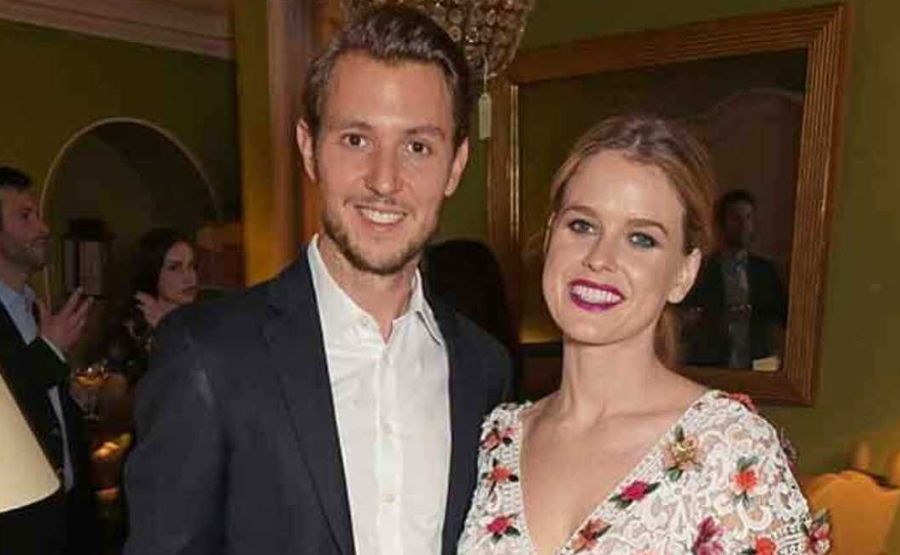
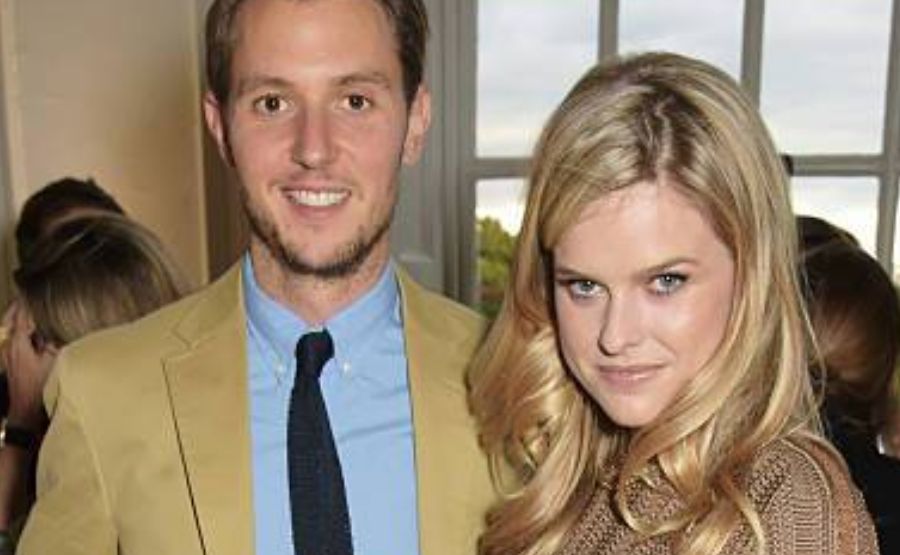
The narrative arc shifts dramatically in 2014, when Cowper-Smith reconnected with Alice Eve, the actress he had dated during their high school years at Westminster School decades earlier. Eve had pursued an acting career with considerable success, appearing in mainstream Hollywood productions including Star Trek Into Darkness (2013) and She’s Out of My League (2010). Cowper-Smith, meanwhile, had been building his undistinguished but solid career in London finance.
How precisely they reestablished contact remains unclear, though accounts suggest they encountered one another through mutual social circles or at a London social event. What is evident is that the reconnection catalyzed genuine romantic interest. In July 2014, Cowper-Smith proposed marriage to Eve—but notably, he first sought her father’s permission while the couple was on a family vacation in Ibiza. This gesture, whether calculated or sincere, suggested a man with traditional values and respect for formal social ritual.
Eve, who was 32 at the time, accepted the proposal enthusiastically. In August 2014, the pair made their engagement public. From a public relations perspective, the narrative was irresistible: the accomplished actress and her high school sweetheart, reconnected by chance years later, embarking on marriage. Eve’s extensive social and professional networks amplified the story’s visibility.
The couple married on December 31, 2014, at Brompton Oratory, a historic Catholic church in London’s Knightsbridge neighborhood. The ceremony was intentionally private—attended by close friends and family rather than the extensive guest lists typical of celebrity weddings. Eve, speaking later about the wedding, recalled arriving in a white cab with her father, deliberately avoiding public detection. She emphasized locking eyes with Cowper-Smith at the altar, a moment of intimate connection amid the ceremony. Prominent members of the entertainment industry were among the wedding guests, indicating that even though the event was private, it was integrated into sophisticated London social networks.
Marriage: The Collision of Two Worlds
The marriage of Alex Cowper-Smith and Alice Eve represented, fundamentally, the collision of two incompatible professional universes. Eve’s career demanded constant mobility—filming in various global locations for months at a time, attending premieres and promotional events, maintaining the public visibility required by entertainment industry success. Her work schedule was inherently unpredictable and demanding.
Cowper-Smith’s career, by contrast, was rooted in London. Investment banking, particularly at the associate and mid-level financier positions, requires physical presence in trading floors and client meetings. The professional relationships that sustain banking careers are built through daily interaction and accumulated trust developed over years in specific locations. Geographic mobility, while possible, comes at considerable cost to career trajectory.
The structural incompatibility was exacerbated by professional culture and lifestyle. Eve inhabited worlds of premiere events, industry networking, and the social machinery that sustains celebrity. Cowper-Smith inhabited conference rooms, client dinners, and the understated professional environments of banking. These are not mere social differences; they reflect fundamentally different rhythms of daily existence.
Accounts from 2014–2016 suggest the couple made genuine efforts to bridge this divide. Cowper-Smith reportedly left his position at Goldman Sachs around the period of his marriage, a significant professional sacrifice intended to reduce conflict and free time for the relationship. This decision—abandoning a lucrative, prestigious career to prioritize marriage—is revealing. It demonstrates that Cowper-Smith was not indifferent to the relationship’s fate; he was willing to subordinate career ambition to personal commitment.
Despite these efforts, the fundamental tension proved insurmountable. Alice Eve later characterized the period in interviews as demanding and ultimately unsustainable. The couple had no children, which both simplified and complicated the situation—simplified in removing custody questions, complicated in suggesting that without children, the relationship lacked sufficient binding force to overcome structural incompatibility.
Separation and Divorce: A Quiet Ending
By 2016, the couple was legally separated. The divorce was finalized in 2017, ending a marriage that lasted approximately three years. Neither party engaged in public recrimination or exposed intimate details. The separation was handled with what might be described as British restraint—painful, but managed without the acrimony and publicity that characterizes many celebrity divorces.
Cowper-Smith’s role in the separation’s narrative, notably, was minimal. He did not grant interviews, did not speak to media outlets, did not attempt to shape public perception of the divorce. His ex-wife, in contrast, spoke about the experience as a “rebirth”—a moment of rediscovery and recommitment to self. Eve described the divorce as forcing her to confront difficult personal truths and ultimately offering liberation and renewed agency over her life choices.
For Cowper-Smith, the divorce marked a return to the discretion that had always characterized his existence. He retreated from any public presence immediately and apparently conclusively.
Personal Life: Privacy as Principle
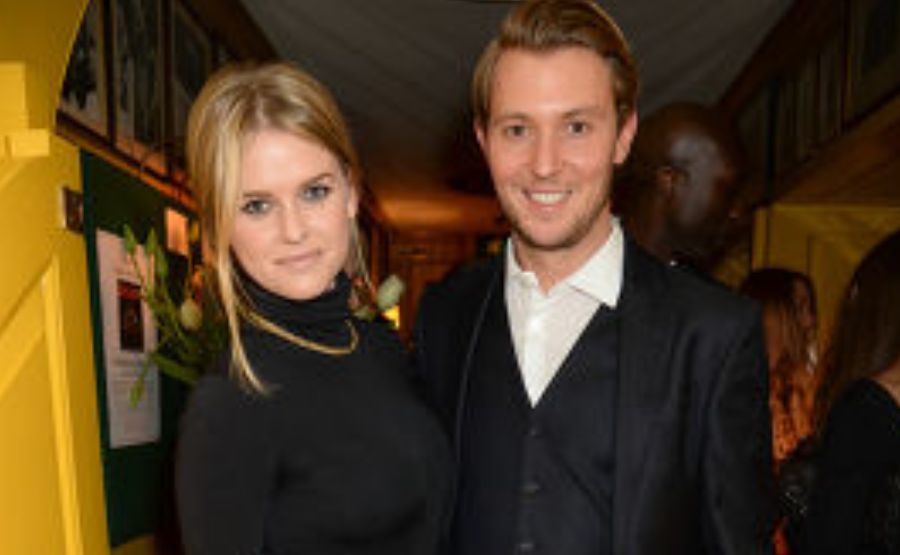
The available biographical material about Cowper-Smith’s personal life is deliberately sparse—a sparseness that appears to reflect genuine preference rather than information scarcity. He maintains no social media presence across any major platform. He has never granted substantive interviews to media outlets. He does not attend public events or industry functions where he might be photographed or documented.
What is known suggests a man of conventional tastes and serious temperament. He is believed to live in London, likely in the same neighborhoods where he worked and spent his early adult life. Post-divorce, he has remained unmarried and, based on available evidence, uninvolved in high-profile romantic relationships.
Accounts from those who have interacted with him characterize Cowper-Smith as polite, intelligent, and somewhat reserved—someone who engages substantively in conversation but does not volunteer extensive personal information. He is described as well-read and interested in subjects beyond finance, though specifics remain limited.
One source mentions charitable work, specifically involvement with British Red Cross initiatives, suggesting at minimum that Cowper-Smith does not entirely withdraw from civic or philanthropic participation. However, these contributions, if they exist, are made privately and without publicity-seeking.
His estimated net worth, ranging from $500,000 to $1 million, derives primarily from his Goldman Sachs salary and presumed ongoing work in finance, possibly as an independent consultant or investment manager. This wealth level is substantial but not exceptional within London financial circles—evidence of professional success, but not of the extraordinary achievement that characterizes top-tier finance professionals.
The absence of public romantic relationships, combined with his retreat from professional visibility, suggests Cowper-Smith has constructed a deliberately modest existence. He appears to have concluded that the collision between privacy preference and celebrity proximity was unworkable, and has chosen privacy decisively.
The Question of Career Sacrifice: Success Redefined
One of the more poignant aspects of Cowper-Smith’s story is the question of career sacrifice. He left Goldman Sachs, one of the world’s most prestigious institutions, during what were presumably prime earning years, in an attempt to preserve a marriage that ultimately failed.
This decision can be interpreted in multiple ways. From a conventional career perspective, leaving Goldman Sachs represents a path not taken—years of accelerated advancement forfeited, senior positions not achieved, the compound effect of early career disruption compounding across decades. By the standards of high finance, it was a costly decision that did not yield the intended payoff.
Yet from another perspective, Cowper-Smith’s choice reflects a particular hierarchy of values. He prioritized the relationship, however briefly, over career trajectory. He was willing to subordinate professional ambition to personal commitment. When the relationship proved unsustainable, he retreated gracefully rather than attempting to leverage celebrity association or publicity for career rehabilitation.
This pattern—choosing discretion and privacy over professional opportunity—has characterized his life before, during, and after the marriage. He could have monetized his connection to a Hollywood actress. He could have sought positions in entertainment finance or celebrity wealth management, building a public profile as “the banker married to Alice Eve.” He could have written a tell-all memoir or granted extensive interviews about the marriage and divorce.
He did none of these things. Instead, he disappeared from public view, suggesting a man for whom the intrusion of celebrity was fundamentally antithetical to his sense of self.
Lasting Legacy and Influence: A Counternarrative
What impact does Alex Cowper-Smith have on the contemporary world? By conventional measures, none. He has not shaped finance, influenced policy, created institutions, or produced notable achievements in any public domain. He lacks the visibility or influence of significant figures.
Yet his significance lies precisely in what he did not do. In an era of relentless personal branding, strategic self-promotion, and the monetization of every biographical detail, Cowper-Smith chose obscurity. He had, briefly, access to celebrity and its attendant opportunities—book deals, consulting positions leveraging celebrity connections, media appearances, the entire infrastructure of fame-adjacent opportunity.
He rejected it entirely.
His story offers a quiet counternarrative to contemporary culture’s assumption that visibility equals value, that public prominence equals success, that one should leverage every available advantage for maximum exposure. Cowper-Smith suggests an alternative model: professional competence pursued privately, achievements valued regardless of external recognition, personal life protected as fundamentally separate from professional identity.
For those who study finance culture, Cowper-Smith represents a vanishing archetype—the accomplished banker who built a career without personal brand, who succeeded through competence rather than visibility. For those interested in masculinity and emotional maturity, he represents a man willing to make relationship sacrifices and accept failure gracefully without attempting revenge, humiliation, or media rehabilitation.
For those exhausted by celebrity culture, he represents the possibility of genuine privacy in an age when privacy seems impossible. His decision to step away from public view was not compelled by scandal or legal liability; it was chosen, consciously, as preferable to the alternative.
Final Words
Alex Cowper-Smith’s life resists the narrative arcs that typically structure biography. There is no triumph to celebrate, no adversity overcome through heroic effort, no public achievement to memorialize. Instead, there is simply a man who built a competent career, experienced unexpected romance, endured its failure, and retreated into the privacy he apparently always preferred.
This makes him, paradoxically, more interesting than many more celebrated figures. In his very ordinariness and his deliberate rejection of the extraordinary exposure that proximity to celebrity offered, Cowper-Smith embodies particular values: the sufficiency of private satisfaction, the legitimacy of non-public achievement, the right to withdraw from attention.
He was, for approximately three years, famous by association. He responded to that fame not by cultivating it, but by ending the association and retreating from visibility. One might question the wisdom of his marriage—joining one’s life to someone in fundamentally incompatible professional circumstances. But one cannot question his self-knowledge or his integrity in recognizing the relationship’s unsustainability and disengaging without recrimination or exploitation.
Whether he found contentment in his London existence, whether the professional trajectory forgone was genuinely unimportant to him, whether he harbors regrets about the marriage—these remain unknown. They are private matters, kept private as he appears to prefer.
In an age of compulsory visibility, there is something almost radical in genuine obscurity, in the refusal to narrate one’s own story, in the acceptance of being forgotten by publics one never sought to engage.
FAQs
1. Who is Alex Cowper-Smith?
Alex Cowper-Smith is a British investment banker and financier, born in October 1981, who became known primarily through his brief marriage to actress Alice Eve (2014–2017). He worked at Goldman Sachs for approximately a decade before leaving around the time of his marriage.
2. How did Alice Eve and Alex Cowper-Smith get together?
They met as teenagers while attending Westminster School in London. They dated during their school years, separated after graduation to pursue different careers, and reconnected in 2014, leading to their engagement and marriage that same year.
3. What was his career at Goldman Sachs?
Cowper-Smith worked as an associate and later as a financier at Goldman Sachs’ London office, handling corporate finance, client relationship management, and investment advisory work.Around the time of his 2014 marriage, he quit the company.
4. When and where did Alex Cowper-Smith marry Alice Eve?
They married on December 31, 2014, at Brompton Oratory, a Catholic church in London’s Knightsbridge neighborhood. The ceremony was private, attended by close friends and family.
5. What led to Alice Eve and Alex Cowper-Smith’s divorce?
The couple’s demanding and incompatible careers contributed to the breakdown. Eve’s acting work required extensive international travel, while Cowper-Smith’s banking career was rooted in London. Cowper-Smith left Goldman Sachs to concentrate on his marriage, but the structural differences were too great to overcome.They separated in 2016 and divorced in 2017.
6. Did Alex Cowper-Smith and Alice Eve have children?
No, the couple had no children during their marriage or afterward.
7. What is Alex Cowper-Smith’s net worth?
His estimated net worth ranges from $500,000 to $1 million USD, derived primarily from his Goldman Sachs career and presumably ongoing financial consulting or investment work.
8. What is Alex Cowper-Smith doing now?
Cowper-Smith maintains a private life in London, away from public attention. He reportedly continues working in finance, possibly as an independent consultant or investor, but keeps details of his current employment private.
9. Does Alex Cowper-Smith have social media accounts?
No, he maintains no public presence on social media platforms and actively avoids media attention and public appearances.
10. Where did Alex Cowper-Smith attend school?
He attended Westminster School, one of London’s most prestigious independent schools, where he met Alice Eve. He later studied business and finance at the University of Nottingham, graduating in 2003.
11. What was the reason Alex Cowper-Smith left Goldman Sachs?
Around the time of his marriage in 2014, he quit his job at Goldman Sachs, ostensibly to put his love with Alice Eve first.This was a significant professional sacrifice made in an attempt to make the marriage sustainable.
12. Is Alex Cowper-Smith in a relationship?
No public information suggests that Cowper-Smith has been in a significant relationship since his divorce in 2017. He remains unmarried and maintains a private personal life.
13. What is notable about Alex Cowper-Smith’s approach to privacy?
Cowper-Smith is distinguished by his deliberate and consistent avoidance of public attention. Despite having had access to celebrity through his marriage, he never leveraged that connection and consciously retreated from visibility after the divorce, suggesting genuine preference for privacy over fame.
14. Did Alex Cowper-Smith and Alice Eve remain on good terms after divorce?
While neither has spoken extensively about their post-divorce relationship, there is no evidence of public acrimony or conflict. The separation appears to have been handled with mutual respect and restraint.
15. Why is Alex Cowper-Smith considered noteworthy if he is so private?
Cowper-Smith’s significance lies in his counternarrative to contemporary culture’s assumptions about visibility and success. His deliberate rejection of opportunities to monetize his connection to celebrity, combined with his consistent retreat from public attention, offers an alternative model of achievement and self-definition.
Explore The Inspiring Journeys Of Influential People On Daily Context.