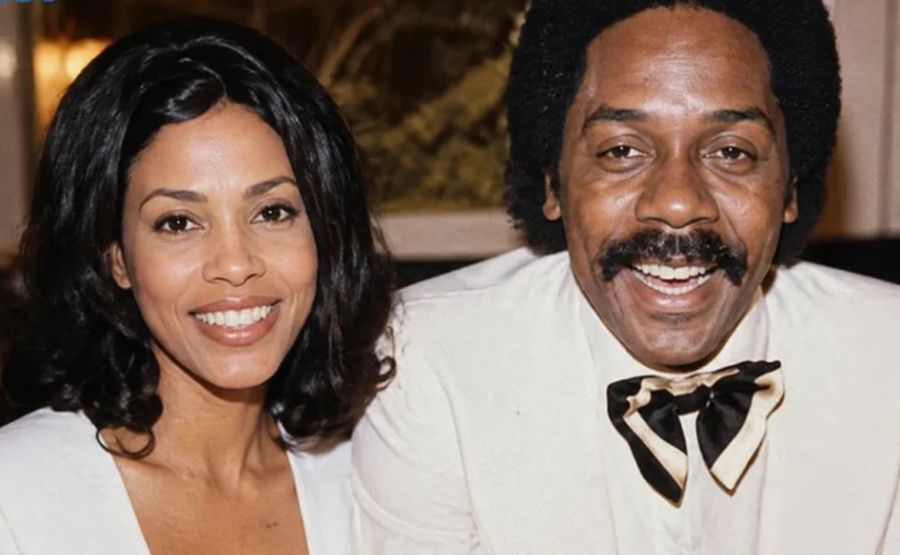
Cicely Johnston: The Quiet Anchor Behind a Life in Public
Cicely Johnston’s story endures not because she chased fame, but because she outlasted it — standing as a reminder that the people who hold lives together from the shadows carry their own kind of history.
Quick Facts
| Detail | Information |
| Born | 1945 (exact date undisclosed) |
| Birthplace | United States (Palm Springs, California, per some sources) |
| Nationality | American |
| Ethnicity | African-American |
| Occupation(s) | Model, airline stewardess, actress (minor role) |
| Notable Film | Caged Heat (1974, dir. Jonathan Demme) |
| Spouse | Demond Wilson (m. He passed away on January 30, 2026, on May 3, 1974. |
| Children | Six: Melissa, Christopher, Demond Jr., Louise, Sarah, and Nicole |
| Current Residence | Palm Springs, California |
| Faith | Christian |
| Awards/Recognition | None formally awarded; recognized informally as a pillar of family and community |
A Woman Shaped by Her Moment
Cicely Johnston came of age during one of the most turbulent and transformative eras in American history. Born in 1945, she grew up in the years following World War II, when the country was rewriting its social contracts — slowly, painfully, and unevenly for African-Americans. The 1950s and 1960s that shaped her character were not abstract civics lessons. They were lived realities: segregated spaces, limited professional doors, and a cultural landscape that rendered Black women largely invisible.
Against that backdrop, Johnston built a quiet, deliberate life. She became a model and a minor film actress before the civil rights movement had fully reshaped those industries. She married a man at the precise moment he was becoming famous. She raised six children while her husband’s career soared and then careened. And when Demond Wilson stepped away from Hollywood to reinvent himself as a minister, she stayed — though that staying was not without its cost.
She is, in the most accurate sense, an understudied figure: a woman whose significance lies precisely in what she did not seek.
See also “Jayne Posner: The Woman Who Kept the Lights On“
Origins and Early Formation
Very little of Johnston’s early life appears in public records. She was born in 1945, placing her childhood squarely within the postwar economic expansion that, for Black Americans, remained deeply stratified. The details of her upbringing — her parents, her education, the particular city or neighborhood — she has kept deliberately private across decades.
What is known suggests a woman of practical ambition. Before modeling, Johnston worked as an airline stewardess, a profession that in the late 1960s carried both professional prestige and unusual independence for women of her generation. The job required composure, the management of public-facing grace under pressure, and the ability to operate confidently in predominantly white professional environments. These were not incidental traits. They became, in time, the defining qualities of her adult character.
The stewardess work also placed Johnston squarely within a world of movement and encounter. It was during this period — or shortly after — that she transitioned into modeling, a choice that required even greater personal exposure in an industry ill-equipped to welcome her.
The Modeling Years: Presence in a Resistant Industry
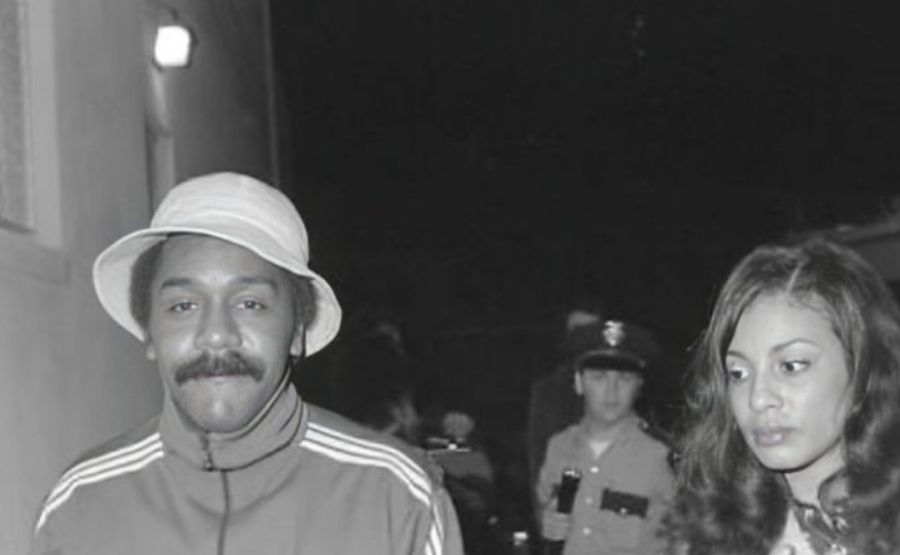
When Johnston entered modeling in the early 1970s, the American fashion industry was only beginning — reluctantly, incrementally — to acknowledge that beauty had more than one face. The civil rights movement had cracked open some doors, but the modeling world remained overwhelmingly white. Black models like Naomi Sims and later Beverly Johnson were celebrated precisely because they were exceptions, anomalies used to signal progressive virtue without structural change.
Johnston occupied a less visible but still significant rung of that same industry. Her work appears to have been concentrated in commercial print and local fashion, rather than the glossy national campaigns that brought women like Sims to prominence. She did not achieve fame through modeling. But her presence in the industry at that particular moment — an African-American woman working with poise in a field not built for her — was a quiet act of persistence.
Her one documented on-screen appearance from this era was a role in Caged Heat (1974), the directorial debut of Jonathan Demme. Produced on a shoestring budget for Roger Corman’s New World Pictures, the film was an exploitation picture set in a women’s prison — provocative, politically charged beneath its B-movie surface, and later recognized as a legitimate artifact of 1970s American cinema. Demme, who would go on to direct The Silence of the Lambs, used the genre conventions of the women-in-prison film to slip in social commentary about gender inequality and institutional power. Johnston’s role in the film was minor. But the context matters: she appeared in a work that, by its very existence, pushed against the margins of what mainstream Hollywood considered acceptable.
The juxtaposition is striking. In the same year she appeared in a film that interrogated institutional confinement, Johnston married Demond Wilson and began constructing the most confining — and most sustaining — structure of her adult life: a large, faith-centered family.
Marriage to Demond Wilson: A Partnership Under Pressure
On May 3, 1974, Cicely Johnston married Grady Demond Wilson, a man who had spent the previous two years becoming one of the most recognized faces on American television. Wilson’s role as Lamont Sanford on Sanford and Son — the NBC sitcom produced by Norman Lear and Bud Yorkin — had turned him into a genuine star. The show, one of the first to center Black family life on network television, attracted enormous audiences and cultural attention. Wilson was at the apex of his visibility when he and Johnston wed.
That timing mattered. She entered the marriage not in the cautious early days of a man still chasing opportunity, but at the peak of his fame. The domestic architecture she helped build — six children, a structured household, a private life kept carefully separate from the public one — became the counterweight to the centrifugal force of celebrity.
What is also documented, and must be acknowledged, is that the marriage was not without serious fracture. Wilson himself acknowledged that his years in Hollywood brought personal failures. Reports indicate that extramarital affairs during his acting career strained the marriage considerably. Johnston navigated those years — the public glare, the private betrayal, the demands of raising children in a high-profile household — with a discipline and restraint that is easier to admire than to explain.
The marriage’s survival, and its eventual deepening, became one of its defining features. When Wilson turned toward religion in the mid-1980s, becoming an ordained minister in the Church of God in Christ in 1984, the transformation required not just his own commitment but the recalibration of their entire shared life. Evangelism is not a private vocation. It demands public witness, constant travel, and a kind of institutional identity that reshapes household rhythms. Johnston adapted to that shift too.
Personal Life: Faith, Resilience, and the Architecture of Home
Johnston has described herself, through the rare glimpses available, as a woman of deep Christian faith. That faith was not merely inherited; it became the organizing framework of her domestic life, particularly as Wilson’s ministry expanded. In 1994, Wilson founded Restoration House of America, an organization near Lynchburg, Virginia, dedicated to rehabilitating former prison inmates through mentorship, spiritual guidance, and vocational training. The work was demanding, community-facing, and morally serious. Johnston’s role in supporting it, while largely invisible to the public, would have required genuine conviction.
The couple raised six children: Christopher, Demond Jr., Louise, Sarah, Nicole, and Melissa. Parenting six children while navigating the demands of a spouse in entertainment, and later in itinerant ministry, is its own form of labor. Johnston managed that labor without public complaint or public credit.
She does not maintain social media accounts. She does not give interviews. The resulting silence has been, in its own way, loudly eloquent — a deliberate refusal of the terms on which celebrity culture trades personal life for attention.
Demond Wilson died of cancer on January 30, 2026, at his Palm Springs home. Johnston survived him. Their son Demond Wilson Jr., in a statement to NPR, described his father as “a devoted father, actor, author, and minister” who “lived a life rooted in faith, service, and compassion.” The statement’s implicit architecture credited the family’s stability — and Johnston was the builder of that stability.
The Quiet Work of Supporting a Transformation
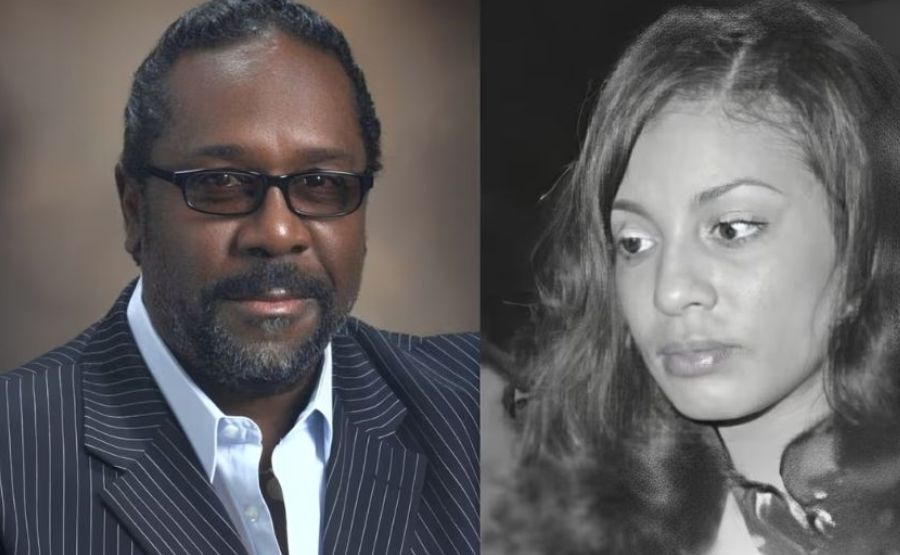
It is worth pausing on what it meant for Johnston to stand beside Wilson through his mid-career reinvention. By the early 1980s, Wilson’s post-Sanford acting work had faltered. Baby… I’m Back (1978) ran for less than a season. The New Odd Couple (1982–83), in which he played Oscar Madison, lasted only slightly longer. The arc of a Hollywood career declining in real time, with its attendant financial and psychological pressures, would have tested any partnership.
When Wilson embraced ministry, he did so not merely as a private spiritual choice but as a complete professional identity. He began preaching to audiences of thousands, touring with a full entourage that, by some accounts, included a secretary, bodyguards, fellow evangelists, a band, and singers. He authored Christian novels, such as The New Age Millennium (1998), and Second Banana: The Bittersweet Memoirs of the Sanford & Son Years (2009), a memoir that provided open reflections on his Hollywood years. He also appeared in faith-based stage productions and launched a center for incarcerated people.
Every one of those pivots had a domestic dimension. Johnston absorbed each one.
Her consistency across those decades — as anchor, as mother, as partner — does not diminish her into mere supporting role. It reveals the particular kind of strength that holds complex lives together: patient, principled, and rarely photographed.
Lasting Legacy and Influence
Cicely Johnston’s legacy resists the conventional categories by which public figures are assessed. She did not build an institution, publish a memoir, or headline a campaign. Her influence was relational and domestic, played out across five decades of marriage, six raised children, and quiet participation in the community work her husband led.
That, too, is a form of legacy. In a culture that systematically undervalues caregiving and relational labor, Johnston’s life documents what sustained, principled presence actually looks like in practice. She was a working Black woman in the modeling industry during an era when that industry was inhospitable to her. She appeared in a film by a director who would become one of American cinema’s most important voices. She married into public life and protected her children from its worst distortions. She endured serious marital strain and chose repair over rupture.
The story of women who make these choices is not often told with the weight it deserves. Johnston’s story is part of a longer, largely unwritten history of African-American women who sustained families, communities, and marriages under conditions that received little external support and less external recognition.
Her survival of her husband — and her six decades of quiet, purposeful living — constitute a form of testimony that does not require a platform to be meaningful.
Final Words
Any fair assessment of Cicely Johnston must begin with what is genuinely not known. The public record is thin. The existing accounts are largely aggregated from secondhand sources, filtered through the more visible story of her husband’s career. She has never invited scrutiny, and the resulting portrait is necessarily incomplete.
What can be said with confidence is this: Johnston built a life of extraordinary duration and internal coherence. She navigated the pressures of celebrity adjacency, personal betrayal, professional reinvention, and religious transformation without fracturing publicly or retreating into bitterness. She raised six children in a household that moved, repeatedly and dramatically, through different identities and demands.
She is not a saint. She is not a symbol. She is a woman who made difficult choices in difficult conditions, and who chose, decade after decade, the harder work of loyalty and continuity over the easier exit of dissolution.
That choice, ordinary as it may seem, is anything but.
FAQs
1. Who is Cicely Johnston?
Cicely Johnston is an American former model, occasional film actress, and longtime wife of actor and minister Demond Wilson, best known for his role as Lamont Sanford on Sanford and Son.
2. When was Cicely Johnston born?
She was born in 1945. Her exact birth date has not been made public, reflecting her deliberate privacy.
3. Where is Cicely Johnston from?
She is American, of African-American heritage, and has been associated with Palm Springs, California, where she and her husband resided for much of their later lives.
4. What was Cicely Johnston’s career?
She worked first as an airline stewardess, then transitioned into modeling in the early 1970s, appearing primarily in commercial print and local fashion work. She also had a minor acting role in Jonathan Demme’s 1974 film Caged Heat.
5. What is Caged Heat and what was her role in it?
Caged Heat was Jonathan Demme’s directorial debut, a women-in-prison exploitation film produced for Roger Corman’s New World Pictures. It has since gained critical recognition for its social commentary. Johnston appeared in a minor capacity; the film starred Erica Gavin, Juanita Brown, Roberta Collins, and Barbara Steele.
6. When did Cicely Johnston marry Demond Wilson?
They married on May 3, 1974, at the height of Wilson’s television fame from Sanford and Son.
7. How many children do they have?
Christopher, Demond Jr., Louise, Sarah, Nicole, and Melissa were the couple’s six children.
8. Did their marriage face difficulties?
Yes. Wilson himself acknowledged that extramarital affairs during his Hollywood years caused serious damage to the marriage. The couple reportedly reconciled and rebuilt their relationship after Wilson’s religious conversion in the 1980s.
9. How did Johnston respond to Wilson’s transition to ministry?
Johnston adapted to Wilson’s full transformation into an ordained Pentecostal minister in 1984 and later his founding of Restoration House of America, continuing to support the family and household through a very different kind of public life.
10. Is Cicely Johnston active on social media?
No. She maintains no public social media presence and rarely, if ever, gives interviews. Her privacy has been consistent and deliberate throughout her adult life.
11. Did Cicely Johnston and Cicely Tyson know each other?
The two women share a first name and African-American heritage but are not related. They moved in overlapping cultural circles given Demond Wilson’s Hollywood career, but no documented connection between Johnston and Tyson has been established.
12. What was Demond Wilson’s net worth, and what does that mean for Johnston?
Estimates of Wilson’s net worth at the time of his death ranged from $1.5 to $2.5 million, accumulated through his television work, book royalties, and speaking engagements. Johnston’s individual financial standing has never been publicly disclosed.
13. Where does Cicely Johnston live now?
As of the most recent available information, she resides in the Palm Springs, California, area — the home she shared with Demond Wilson for much of their later lives together.
14. What happened to Demond Wilson?
Wilson died on January 30, 2026, from complications related to cancer, at his Palm Springs home. Johnston survived him. His son described him in a public statement as “a devoted father, actor, author, and minister.”
15. What is Cicely Johnston’s lasting significance?
Johnston represents a category of historical actor that is rarely documented well: the person whose sustained private labor enables someone else’s public life. Her career in a racially restricted modeling industry, her decades of family anchoring, and her navigation of serious marital crisis make her story both particular and representative of a much broader, underacknowledged history.
Explore The Inspiring Journeys Of Influential People On Daily Context.